The provided text offers a rich tapestry of information, weaving together the lives and works of several notable individuals. While the primary focus of the user's request was the birth date of Edvardas Dregva, the accompanying data delves into the biographies of composers like Eduardas Balsys, and numerous writers and cultural figures, many of whom share birth dates around the month of January. This article aims to synthesize this information, providing a comprehensive overview while specifically addressing the query about Edvardas Dregva.
The Life and Work of Edvardas Dregva
Edvardas Drėgva was born on July 25, 1925, in the village of Kapčiškiai, within the Žasliai district. His parents were Stasys Drėgva and Juzefa Cesliukaitė. His early education began on September 1, 1941, when he enrolled in the second grade of Kaišiadorys Gymnasium, where he studied until June 15, 1944. Following this, he continued his education in Vilnius.
Drėgva's literary career is characterized by his contributions to poetry, particularly for children, and his work as a songwriter. He published his poems in periodicals and released two collections of children's poetry: "Riešutauti aš ėjau" (I Went Nutting) in 1974 and "Vasaros kraitelė" (Summer's Treasure) in 1978. He also penned numerous song lyrics. In addition to his poetic works, Drėgva was known for his satirical poems and epigrams. In recent years, several of his epigrams were published in "Valstiečių laikraštis" (Peasant Newspaper).
Archival records related to Edvardas Drėgva include a birth registry extract from April 19, 1943, and a certificate from Kaišiadorys Gymnasium dated 1944. These documents, along with biographical information from Rolandas Gustaitis's "Kaišiadorių rajono gyvenviečių žinynas" (Directory of Settlements in Kaišiadorys District, 2001) and V. Vanagas's "Lietuvių rašytojų sąvadas" (Directory of Lithuanian Writers, 1987), form the basis of his biographical details.
It is noteworthy that during the Nazi occupation, Edvardas Drėgva worked as a bookkeeper at the Laurai Children's Home. This detail connects him to another significant figure, Father Jonas Žemaitis, who, as director of the same institution, played a crucial role in saving Jewish children during the Holocaust.
A Glimpse into the Life of Eduardas Balsys
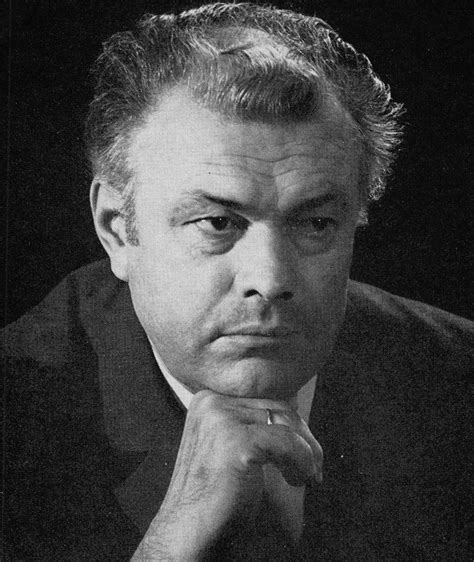
While the primary subject is Edvardas Dregva, the provided text extensively details the life and work of Eduardas Balsys, a prominent composer of the post-war generation. Balsys's creative period spanned the era of Soviet dictatorship, yet his music distinguished itself through its artistic merit, imbued with vigor and temperament. He is recognized as a leader of the stylistic shift in the 1960s and significantly influenced the post-Stalinist renewal of Lithuanian music, aligning him with moderate modernists. His most substantial works include large-scale compositions such as ballets, operas, oratorios, and concertos.
Eduardas Balsys was born on December 20, 1919, near Nikolayev, Ukraine. His family soon returned to Lithuania, settling first in Skuodas in 1921 and later moving to Klaipėda in 1928. He attended Klaipėda Vytautas Magnus Gymnasium until 1939, where he played the alto and tuba in the wind orchestra. In 1940, he entered the military school in Kaunas, graduating with the rank of lieutenant. During the war, Balsys taught chemistry, physics, mathematics, physical education, and music at a gymnasium in Kretinga. It was during this time that he decided to pursue composition, graduating from the Lithuanian State Conservatory's composition class under Antanas Račiūnas in 1950.
Throughout his life, Eduardas Balsys taught composition and orchestration at the Lithuanian State Conservatory. He headed the Composition Department from 1960 and chaired the Lithuanian Composers' Union from 1962 to 1972. Balsys received two state awards for his ballet "Eglė žalčių karalienė" (Eglė, the Queen of Grass Snakes) in 1960 and his oratorio "Nelieskite mėlyno gaublio" (Do Not Touch the Blue Globe) in 1974.
Balsys's oeuvre evolved significantly, moving from the classical form of his String Quartet to the expressionistic opera "Kelionė į Tilžę" (Journey to Tilsit), which employed dodecaphonic techniques. His musical legacy mirrors the trajectory of Lithuanian music during his time, progressing from ideologically driven "folkloric" romanticism (pre-1958) towards stylistic renewal and the adoption of new compositional techniques, particularly dodecaphony and aleatory music, from the mid-1960s onwards.
His creative output can be broadly categorized into three periods:
- 1950-1958: This was a period of stylistic formation, influenced by classical and romantic music, the dramatic principles of Russian composers' symphonic music, and the mandatory "folkloric" style, evident in his String Quartet. Other significant works from this era include "Heroic Poem for Symphony Orchestra" and "Violin Concerto No. 1."
- 1958-1965: This period marked a stylistic turning point in Lithuanian music. Balsys developed a new approach to folklore, often reinterpreting it and altering its original character or genre. He also incorporated elements of popular music, such as the rumba rhythm, and utilized quartal harmony and extended tonality. His "Violin Concerto No. 2" best exemplifies these changes, showcasing neoclassical features like clear themes, concise material presentation, motoric rhythm, and dramatic contrasts. It remains one of the most popular Lithuanian violin concertos.
- 1965-Death: The longest period of his career, characterized by the increasing prominence of expressionist elements and dodecaphonic techniques in his music.
A Pantheon of Lithuanian Writers and Cultural Figures
The provided text also includes birth dates and brief biographical notes for a multitude of Lithuanian writers, translators, and cultural figures, many of whom were born in January or February. While not directly related to Edvardas Dregva's birth date, this information paints a broader picture of Lithuania's rich literary landscape.
Notable individuals mentioned include:
- Jakob Grimm (born January 4, 1785), German folklorist and linguist, co-collector of "Children's and Household Tales."
- Kazys Boruta (born January 6, 1905), Lithuanian writer and translator, known for his humorous novella-fairy tale "Jurgio Paketurio klajonės su visokiais pavojais" and the short story collection "Dangus griūva."
- Gerald Durrell (born January 7, 1925), English writer, naturalist, and traveler, famous for his books about nature like "My Family and Other Animals."
- Sinken Hopp (born January 9, 1905), Norwegian writer, author of the popular novella-fairy tale "Stebuklingoji kreida" (The Magic Chalk).
- Antanas Biliūnas (born January 15, 1905), Lithuanian prose writer, author of the memoir-like book "Baltieji šešėliai" and the short story collection "Puntuko akmuo."
- Anna Sakse (born January 16, 1905), Latvian writer, known for her fairy tale books such as "Laimės kalvis" (The Smith of Happiness).
- Robert Cormier (born January 17, 1925), American writer, renowned for his young adult novel "The Chocolate War."
- Alma Karosaitė (born January 19, 1945), Lithuanian poet, author of numerous children's books, poems, and plays.
- Ivan Vasilenko (born January 20, 1895), Russian writer, author of children's stories and novellas, awarded a State Prize for "Žvaigždutė" (Little Star).
- Edith Klatt (born January 24, 1895), German children's writer, who began her writing career in her sixties.
- Bronislava Kerbelytė (born January 27, 1935), Lithuanian folklorist and professor.
- Susan Coolidge (born January 29, 1835), American writer, author of the "Katy" series.
- Aleksas Baltrūnas (born February 9, 1925), Lithuanian prose writer, author of children's and young adult stories and novellas.
- Jonas Liniauskas (born February 12, 1955), Lithuanian writer, chairman of the Lithuanian Writers' Union.
- Leonidas Vaisbergas (born February 13, 1925), Russian writer, author of the novella "Laivų kapinės" (Ship Graveyard).
- Kazimieras Paškauskas (born February 13, 1955), Lithuanian artist, book illustrator, and publisher.
- Petronėlė Orintaitė (born February 18, 1905), Lithuanian writer and educator, emigrated to the West and later lived in the USA, author of poetry collections, poems, and novellas for children and adolescents.
- Aldona Liobytė-Paškevičienė (born February 24, 1915), playwright, prose writer, and translator, author of plays, stories, and fairy tales for children, and translator of numerous foreign authors.
- Marcel Pagnol (born February 28, 1895), French writer, known for his childhood memoirs, including "Mano tėčio šlovė" (My Father's Glory).
- Piotr Yershov (born March 6, 1815), Russian writer, author of the famous fairy tale "Arkliukas kupriukas" (The Little Humpbacked Horse).
- Vera Panova (born March 7, 1905), Russian writer, author of a series of works about children.
- Algė Varnaitė (born March 16, 1965), artist, graphic designer, and associate professor.
- Juozas Balčikonis (born March 24, 1885), Lithuanian linguist and translator, most recognized for his translations of fairy tales by Andersen, the Brothers Grimm, Perrault, and Hauff, as well as works by Jules Verne and Daniel Defoe.
- Jonas Šukys (born March 25, 1935), Lithuanian linguist, educator, and writer, author of children's books and grammar textbooks.
- Hans Christian Andersen (born April 2, 1805), Danish writer, most famous for his fairy tales and stories with philosophical and metaphorical depth.
- Bernard Ashley (born April 2, 1935), English writer, known for his novella "Teris ant tvoros" (Terry on the Fence).
- Anthony Horowitz (born April 5, 1955), English writer, author of numerous books, often in series, including the "Griffin" series.
- Kazys Almenas (born April 11, 1935), prose writer, returned to Lithuania after its independence and founded a publishing house.
- Paul van Loon (born April 17, 1955), Dutch writer, known for his horror stories.
- Rafael Sabatini (born April 29, 1875), English writer, most famous for his "Captain Blood" trilogy.
- Antanas Pivoras (born May 2, 1935), Lithuanian writer and educator.
- Mats Wahl (born May 10, 1945), Swedish writer, primarily known for his young adult novels, including the acclaimed novella "Įsilaužėlis" (The Intruder).
- Tormod Haugen (born May 12, 1945), Norwegian writer, recipient of the H.C. Andersen Award, author of fairy tales and problem-focused prose for children.
- Eoin Colfer (born May 14, 1965), Irish writer, famous for the "Artemis Fowl" book series.
- Danutė Skėraitytė-Jovaišienė (born May 16, 1935), Lithuanian poet, author of several poetry collections for children.
- Antanas Drilinga (born May 16, 1935), Lithuanian writer, author of children's poetry books and translator.
- Jūratė Račinskaitė (born May 18, 1955), theater artist and book illustrator, created scenography and puppets for children's plays and illustrated poetry collections.
- Susan Cooper (born May 23, 1935), English-American writer, known for her five-part series "The Dark Is Rising."
- Vanga Gedmantaitė-Galkuvienė (born May 24, 1935), Lithuanian artist, illustrator of children's books.
- Mary Woodbury (born May 29, 1935), Canadian writer, author of novels for young adults.
- Žemaitė (born June 4, 1845), classic Lithuanian writer, author of stories, fairy tales, and poems for children.
- Pranas Imsrys (born June 16, 1905), Lithuanian poet, emigrated to the West and later lived in Canada, author of poetry collections for children.
- Valdis Lukas (born June 21, 1905), Latvian cultural figure and poet, author of numerous poems for children.
- Marija Mašiotaitė-Urbšienė (born June 23, 1895), historian, bibliographer, and memoirist.
- Stasys Sabonis (born May 24, 1925), translator, translated over 20 books for children and adolescents from various Slavic languages.
- Auksė Mardosaitė (born July 5, 1935), translator from English, author for children.
- Jonas Žemaitis (born January 31, 1904), priest, active member of the Salesian Society, credited with saving Jewish children during the Nazi occupation, and instrumental in preserving the Rumšiškės church.
- Alvydas Augustinas Jegelevičius (born 1949), composer, performer, poet, and writer, member of both the Lithuanian Composers' Union and the Lithuanian Writers' Union.
Protest Art: The Rebels of the Soviet Era
The Role of Edvardas Dregva in Historical Context
Edvardas Drėgva's life and literary output occurred against the backdrop of significant historical events in Lithuania, including the interwar period, World War II, and the Soviet occupation. His work as a songwriter and poet for children reflects a desire to contribute to the cultural enrichment of younger generations during a complex and often challenging era. His connection to Father Jonas Žemaitis, a figure recognized for his humanitarian efforts during the Holocaust, highlights the intertwined lives of individuals within a community, even those from different professional spheres. The archival data and biographical snippets underscore the importance of preserving such details to understand the broader historical and cultural narrative of Lithuania.