Lithuania's social security system provides a crucial safety net for individuals and families during times of illness, childbirth, and child-rearing. Understanding the intricacies of these benefits, including maternity, paternity, and sickness leave payments, is essential for financial stability. These benefits are calculated individually, taking into account personal income, with established minimum and maximum limits to ensure fairness and adherence to legal frameworks. These limits are regularly reviewed and adjusted in line with the country's average wage (VDU).
Sickness and Caregiving Benefits: Ensuring Support During Illness
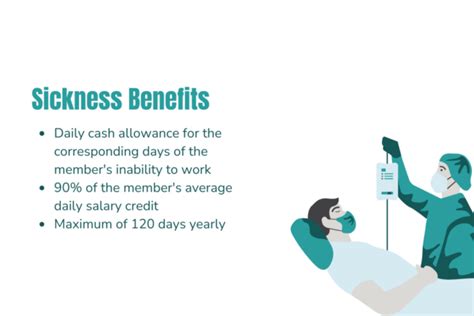
The sickness benefit is designed to provide financial support when an individual is unable to work due to illness or to care for a family member. The monthly sickness benefit cannot be less than 11.64 percent of the country's average wage (VDU) that was in effect in the quarter preceding the determination of temporary incapacity for work. For instance, from April to June, the minimum sickness benefit amounts to no less than 292.64 euros per month, representing an increase of 11.45 euros compared to the first quarter of the year.
For individuals with lower incomes, a daily minimum sickness benefit of 14 euros is applied. This ensures that even those with minimal earnings receive a baseline level of support. The "Sodra" (Lithuanian social insurance fund) clarifies that this minimal benefit is paid when the calculated benefit amount, based on an individual's insured income, falls below this established minimum threshold.
On the higher end, the maximum compensable earnings for calculating sickness benefits are capped at twice the country's average wage (VDU) applicable in the quarter before the incapacity for work arose. Consequently, during the second quarter of the year, the maximum monthly sickness benefit is capped at 3120.50 euros. This represents a significant increase of 122 euros compared to the previous quarter, offering greater financial security to those with higher incomes.
When caring for a family member, the maximum monthly sickness benefit has also seen an increase, rising from 3185.83 euros to 3315.60 euros. Similarly, the daily benefit for caregiving has increased from 152.43 euros to 158.64 euros.
Childcare Benefits: Supporting Parenthood and Family Growth
Benefits for raising children, including maternity, paternity, and childcare leave payments, are structured to support families during the crucial early years of a child's life. The minimum threshold for these benefits is set at 8 basic social benefit (BSI) units. This ensures that these payments are always higher than the minimum consumption needs applicable during the benefit period. The BSI rates used for calculation are those that were in effect in the month preceding the eligibility for the benefit.
For individuals becoming eligible for maternity, paternity, or childcare benefits between April and June of the current year, the minimum benefit limit is set at 592 euros. When one parent becomes eligible for childcare benefits in the second quarter, the maximum benefit for the two non-transferable months reaches 3922 euros, an increase of 153 euros compared to the first quarter.
The choice of childcare leave duration also impacts the benefit amount. Opting for childcare leave until the child turns 18 months results in a maximum benefit increase of 118 euros, bringing the monthly total to 3016.92 euros from the previous 2898.84 euros. For those who choose to extend childcare leave until the child turns 24 months, the maximum monthly benefit during the first year of childcare increases from 2174.13 euros to 2262.69 euros, and in the second year, it rises from 1449.42 euros to 1508.46 euros. The maximum monthly paternity benefit, effective from April, stands at 3900.88 euros, an increase of nearly 153 euros compared to the preceding quarter.
It is crucial to note that planning for these benefits, especially for self-employed individuals, should ideally begin before pregnancy. Milda Maknavičienė, a benefits specialist, emphasizes that self-employed individuals often operate under myths and may incorrectly assume they are not entitled to any benefits. By understanding their specific category of self-employment and the associated tax contributions, individuals can often unlock significant social guarantees. Making "homework" - understanding the system - can transform the perception from "nothing is due to me" to "a lot is due to me."
Regarding the non-taxable income (NPD) deduction, it is generally recommended for low-income earners. For those with combined incomes exceeding the national average wage, it might be safer to not apply the NPD for maternity or childcare benefits to avoid potential repayment obligations later in the year.
The decision between 18 or 24 months of childcare leave is highly individual and depends on family circumstances and preferences. While mathematical calculations can guide the choice based on expected income levels, other factors like the desire to spend more time with the child and plans for childcare facilities also play a significant role. It's also important to remember that the chosen leave duration and the intended return-to-work date can be specified separately when applying to "Sodra" and the employer.
Paternity's Non-Transferable Months: A Balancing Act
The introduction of non-transferable paternity months aims to encourage fathers' involvement in childcare. However, the practical implementation has sometimes led to dissatisfaction. These months are not mandatory; fathers can choose not to take them. When taken, they are equivalent to childcare leave. The core issue arises because, generally, only one parent can be on childcare leave at a time (unless it's a multiple birth). This means the mother might have to return to work during the father's non-transferable months, potentially leading to financial or logistical complications if she hasn't planned for it. Careful planning, including considering the father's optimal time to take these leave periods and the mother's subsequent arrangements (such as annual or unpaid leave), is crucial to mitigate these inconveniences. Fathers can also split these non-transferable months, but each time, the mother must formally return to work or utilize other forms of leave.
Unemployment Benefits: A Support System for Job Seekers
Unemployment benefits consist of two components: a variable and a fixed part, both linked to the minimum monthly wage (MMA). The fixed part of the unemployment benefit is equal to 23.27% of the MMA applicable for the month for which the benefit is paid. For instance, if the MMA in 2026 is 1153 euros, the fixed part of the unemployment benefit amounts to 263.20 euros, remaining consistent with the first quarter.
The variable part of the unemployment benefit is determined by an individual's insured income history. For example, someone registering as unemployed in April 2026 would receive a fixed benefit of 263.20 euros, with the variable portion calculated based on their average insured income from September 2023 to February 2026. If their average monthly insured income was 1500 euros before taxes, their unemployment benefit for April-June would be 850.15 euros, decreasing to 733.75 euros from July to September, and then to 617.35 euros from October to December. Benefits for incomplete months are prorated based on the calendar days of that month.
The maximum unemployment benefit is capped at 58.18% of the VDU in effect in the quarter preceding the acquisition of unemployment status. Therefore, individuals becoming unemployed between April 1st and June 30th will receive a maximum unemployment benefit of 1462.70 euros.
Navigating the System: Key Considerations and Future Directions
The information provided by "Sodra" clarifies the benefit calculation process, especially in complex scenarios like a mother becoming pregnant again while on childcare leave. In such cases, a mother can typically choose the more favorable calculation scenario from her first child's benefits. If she has returned to work briefly before the second pregnancy, a special provision allows her to use the first child's calculation scenario if she had at least one day of childcare benefit receipt within the 12 months prior to eligibility for the new benefit. This highlights the importance of timing, particularly concerning the father's use of his non-transferable months. If a mother chooses to extend her time away from the workforce for a third year without returning to work, the first child's calculation scenario can also be applied.
There is ongoing discussion among policymakers regarding the adequacy and structure of childcare benefits, particularly in light of Lithuania's declining birth rate. Some suggest a review of benefit "caps" and even the overall benefit amounts. Algirdas Sysas, Chairman of the Seimas Budget and Finance Committee, acknowledges that while children are born out of love, state support is crucial for families to establish themselves. He suggests that if the budget allows, reviewing the caps for childcare benefits could be beneficial, especially given the current demographic situation.
Linas Kukuraitis, Deputy Chairman of the Seimas Social Affairs and Labour Committee, advocates for a more fundamental review of the childcare benefit system. He points to a significant surplus in the social insurance fund dedicated to childcare benefits, suggesting that this surplus could be better utilized to support families, especially given the demographic challenges. He argues that the current system, which often results in a significant drop in income for families after the initial non-transferable months, places them in a precarious financial situation. Kukuraitis proposes increasing benefit rates and re-evaluating the "caps," particularly for families with multiple children or higher incomes, who experience a substantial income reduction during childcare leave.
The Child Care Subsidy: Explained by our G8 team
The Ministry of Social Security and Labour is also implementing changes to broaden access to childcare support. From June, a benefit for childcare will be available to a wider range of families, including those who do not meet the social insurance contribution requirements for "Sodra" benefits. This aims to provide a basic income for young parents and facilitate the combination of family life with education or career development. This benefit, currently set at 444 euros per month and payable until the child turns two, will be extended to all parents raising children under two, regardless of their social insurance status. This initiative seeks to ensure equal social guarantees for all parents with young children.
For individuals who are both working and studying, they may still be eligible for childcare benefits from "Sodra" if they meet the general requirements, including having a sufficient social insurance contribution history. The receipt of a scholarship does not preclude eligibility for childcare benefits from "Sodra."
The ongoing discussions and legislative proposals highlight a continuous effort to adapt Lithuania's social benefit system to the evolving needs of families, the economy, and the demographic landscape. The goal is to provide robust support that encourages family growth and ensures financial security during critical life stages.
tags: #motinystes #ismoka #delfi